GLOW (70 mg Vial) Dosage Protocol
Reconstitution
| Vial | Add |
|---|---|
| 70mg blend | 3ml bacteriostatic water |
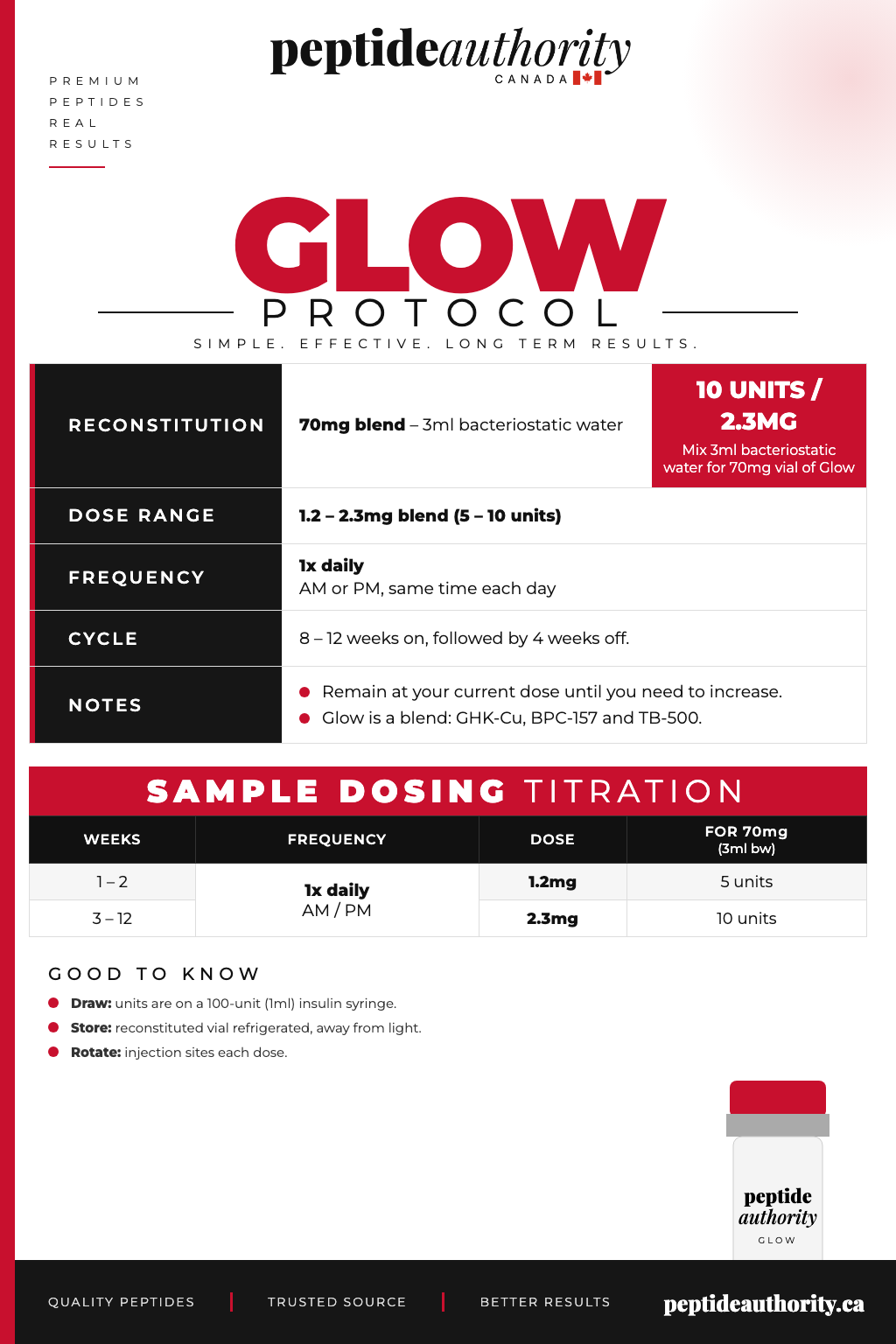
10 units = about 2.3 mg of blend on a 100-unit (1 mL) insulin syringe.
Glow is a blend of GHK-Cu (50 mg), BPC-157 (10 mg) and TB-500 (10 mg).
Protocol Summary
| Dose range | 1.2 – 2.3 mg blend (5 – 10 units) |
|---|---|
| Frequency | 1x daily, AM or PM |
| Cycle | 8 – 12 weeks on, then 4 weeks off |
Sample Titration
| Weeks | Dose | Syringe (100-unit) |
|---|---|---|
| 1 – 2 | 1.2 mg | 5 units |
| 3 – 12 | 2.3 mg | 10 units |
Stay at your current dose until you need to change it. Keep timing consistent.
Protocol Sheet
About These Figures
There is no official or clinical dosing standard for GLOW Blend. The numbers above reflect commonly published research and community protocols, and sources disagree with each other. The amount of water you add changes what each syringe unit means, so always work from your own vial's concentration. See how to reconstitute and the measurement guide.
Frequently Asked Questions
How much bacteriostatic water do I add to a 70 mg blend GLOW vial?
The sample protocol on this page adds 3 mL of bacteriostatic water to the 70 mg blend vial. That gives about 23,333 mcg per mL, so 10 units = about 2.3 mg of blend on a 100-unit (1 mL) insulin syringe. Other sources use different volumes, which changes what each syringe unit means, so always recalculate from your own vial.
How many syringe units is 1.2 mg of GLOW?
At the concentration above, 1.2 mg is 5 units on a 100-unit (1 mL) insulin syringe. Use the peptide calculator to check your own numbers.
Is there an official dose for GLOW?
There is no clinical dosing standard for research vials. The figures on this page reflect commonly published research and community protocols, and sources disagree with each other. They are educational only and are not medical advice.
Educational information only. This is general information, not medical advice, and no peptide covered here is approved by Health Canada for human use. Talk to a licensed healthcare professional about your health.
Related articles
- I'm New to Peptides: Where Do I Start?
- Why Are Peptides Supplied as a Powder?
- Peptide Storage: Lyophilized and Reconstituted Guidelines
- Peptide Measurement Guide: mg, mcg and Units
Educational resource only. This information is not medical or legal advice, and Peptide Authority does not offer peptides or any products for use.